


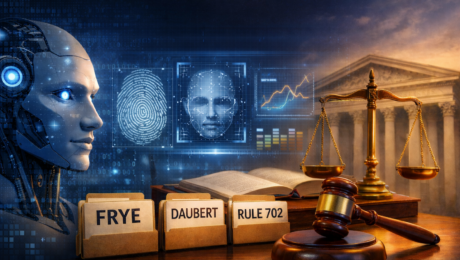
Artificial intelligence increasingly produces outputs used as evidence in court. From facial recognition to risk assessment algorithms, these systems raise new reliability questions. This article explains how existing evidentiary standards—Frye, Daubert, and Federal Rule of Evidence 702—already govern algorithmic proof and why rigorous judicial scrutiny is essential.


Artificial intelligence is reshaping community supervision by influencing risk assessment, monitoring, and decision-making. From automated alerts to predictive tools, these systems guide supervision practices in ways that are often unseen. This article examines how AI shapes outcomes, resource allocation, and professional judgment in probation, parole, and pretrial services.
Artificial intelligence is quietly shaping how cases move through modern courts. From case management systems and scheduling algorithms to drafting tools and risk assessments, AI influences how information reaches the bench. This article examines how AI in court administration affects judicial decision-making and why understanding these systems is now part of judicial responsibility.

Artificial intelligence is reshaping criminal defense practice. From legal research and discovery review to sentencing advocacy and cross-examination preparation, AI offers powerful efficiency gains. This article explains how defense attorneys can use AI responsibly, maintain ethical obligations, and strengthen representation without surrendering professional judgment.


Police body-worn cameras were introduced as a major step toward transparency and accountability. After more than a decade of widespread adoption, the results are more complex. Research shows cameras can provide valuable evidence and documentation, but technology alone cannot create accountability without strong leadership, supervision, and organizational culture.

Artificial intelligence is entering prosecutors’ offices through research tools, evidence management platforms, and document analysis systems. But efficiency cannot override constitutional obligations or ethical duties. This Hardwiring Justice article examines how AI in prosecution must remain assistive, transparent, and tightly governed to protect due process, professional responsibility, and public trust.
AI - Prosecutors 2
Artificial intelligence is increasingly used in prosecutors’ offices for discovery review, research, drafting, and case management. But ethical responsibility does not shift to the technology. This article examines AI ethics for prosecutors, emphasizing accountability, verification of AI outputs, CJIS compliance, and practical guardrails for responsible adoption.


This episode of Justice Speaks examines public defense in the U.S. Virgin Islands with Deputy Chief Public Defender Howard Phillips. Drawing on decades of courtroom experience, Phillips discusses the territory’s court structure, systemic challenges, speedy-trial concerns, and the realities of defending indigent clients in one of the nation’s most unique jurisdictions.


Artificial intelligence is already embedded in modern policing. From predictive tools and facial recognition to investigative analytics and real-time alerts, law enforcement AI increasingly shapes what officers see and how decisions begin. This article examines operational uses, governance gaps, and why AI at the front door of justice demands closer scrutiny.

This Justice Speaks episode examines how treatment court data supports accountability, credibility, and growth nationwide. Dr. Kristen DeVall of the National Treatment Court Resource Center discusses research, national tools, and collaboration that help treatment courts move beyond anecdote and strengthen evidence-based decision making across all court models.
-

Connecticut Chief Justice Raheem L. Mullins on Court Leadership
Chief Justice Raheem L. Mullins discusses menta... -

Substance Use Disorder Stigma: Language and Attitudes Matter
Language and attitudes can influence how justic... -

Nebraska Chief Justice Jeffrey J. Funke on the Future of Justice
Chief Justice Jeffrey J. Funke discusses judici...