
Hardwiring Justice Series
This series of articles examines how artificial intelligence is being embedded into justice systems and how those choices shape institutional behavior, decision-making, and outcomes. Rather than focusing on speculative futures, this series addresses the present reality of AI already operating in court operations, administrative processes, and evidentiary practices. The central premise is straightforward: when tools are built into justice institutions, they influence how justice is delivered. The Hardwiring Justice series explores why governance must precede entrenchment and what courts and justice leaders must confront now, not later.
The question is not whether AI will shape justice systems, but whether those choices will be made deliberately or by default.

Hardwiring Justice - Part 1
Introduction - Hardwiring Justice: Governing AI Before It Governs the Justice System
Artificial intelligence is already embedded across justice system operations, shaping outcomes long before judicial review. This article introduces the Hardwiring Justice series, arguing that AI governance in the justice system must come before entrenchment. Courts must assert transparency, accountability, and institutional oversight to ensure technology serves justice rather than silently redefining it.
Hardwiring Justice - Part 2
AI Describes Many Technologies and None of Them Are Intelligent
Hardwiring Justice, Part II breaks down the technologies commonly labeled as “AI” in the criminal justice system. From rule-based programs and risk assessment tools to language models and hybrid platforms, the article explains how these systems actually work, where they are used, and why their differences matter for courts and justice leaders.

Hardwiring Justice - Part 3A
Law Enforcement and Artificial Intelligence: Justice at the Front Door
Artificial intelligence now operates quietly within many policing systems. Predictive tools, facial recognition, investigative analytics, and real-time alerts increasingly shape what officers see and how initial decisions form. This article explores how AI influences law enforcement operations, the governance gaps surrounding its use, and why technology at the front door of justice deserves careful scrutiny.
Hardwiring Justice - Part 3B - 1
Ethical Use of Artificial Intelligence by Prosecutors
Artificial intelligence is increasingly used in prosecutors’ offices for discovery review, research, drafting, and case management. But ethical responsibility does not shift to the technology. This article examines AI ethics for prosecutors, emphasizing accountability, verification of AI outputs, CJIS compliance, and practical guardrails for responsible adoption.
Hardwiring Justice - Part 3B - 2
Artificial Intelligence in Prosecution
Artificial intelligence is entering prosecutors’ offices through research tools, evidence management platforms, and document analysis systems. But efficiency cannot override constitutional obligations or ethical duties. This Hardwiring Justice article examines how AI in prosecution must remain assistive, transparent, and tightly governed to protect due process, professional responsibility, and public trust.
Hardwiring Justice - Part 3C
Artificial Intelligence for Defense Attorneys: Turning AI Into a Defense Tool
Artificial intelligence is reshaping criminal defense practice. From legal research and discovery review to sentencing advocacy and cross-examination preparation, AI offers powerful efficiency gains. This article explains how defense attorneys can use AI responsibly, maintain ethical obligations, and strengthen representation without surrendering professional judgment.
Hardwiring Justice - Part 3D
AI in Court Administration and Judicial Decision-Making
Artificial intelligence is quietly shaping how cases move through modern courts. From case management systems and scheduling algorithms to drafting tools and risk assessments, AI influences how information reaches the bench. This article examines how AI in court administration affects judicial decision-making and why understanding these systems is now part of judicial responsibility.

Hardwiring Justice - Part 3E
How AI Influences Community Supervision Practices
Artificial intelligence is reshaping community supervision by influencing risk assessment, monitoring, and decision-making. From automated alerts to predictive tools, these systems guide supervision practices in ways that are often unseen. This article examines how AI shapes outcomes, resource allocation, and professional judgment in probation, parole, and pretrial services.
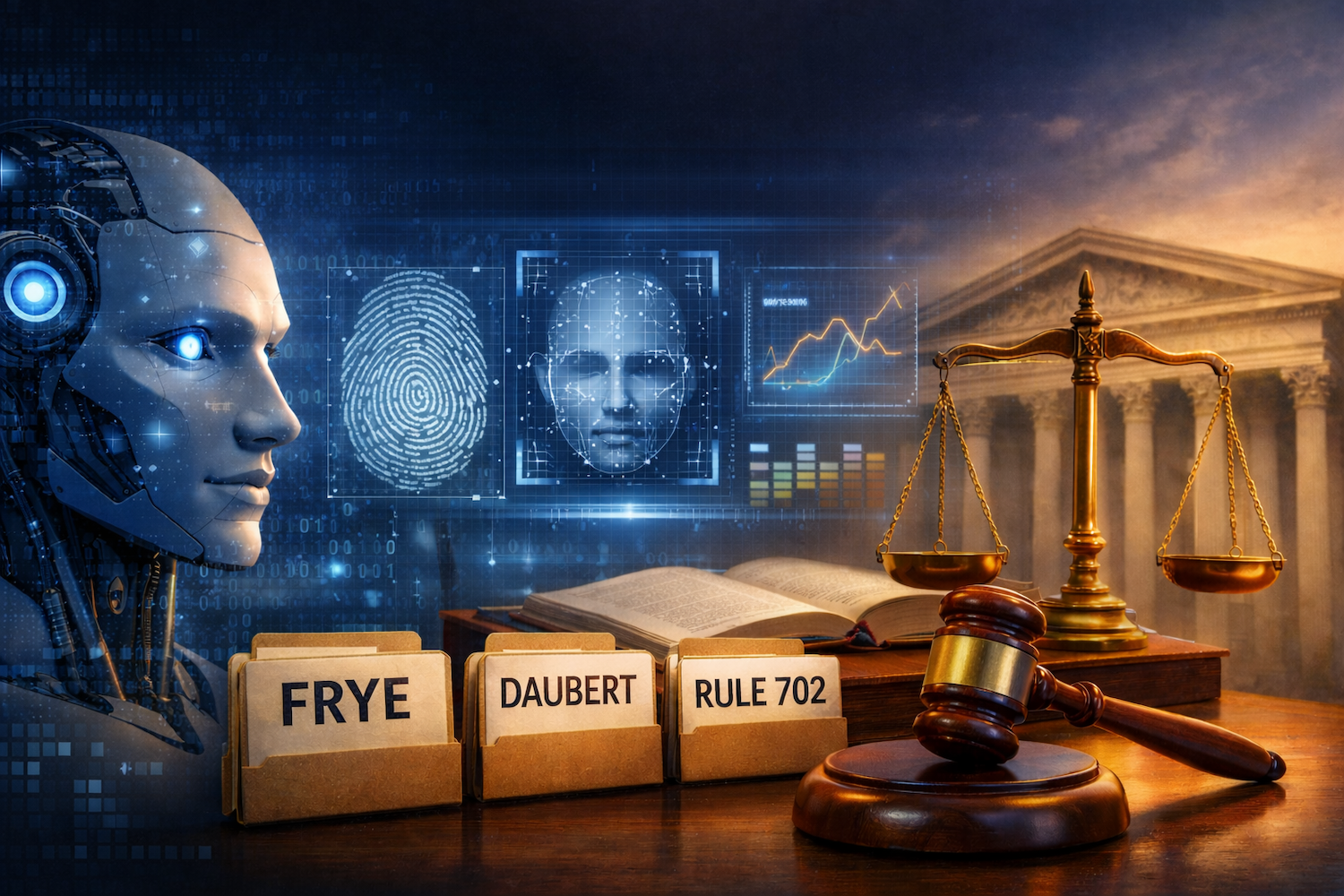
Hardwiring Justice - Part 4
When AI Becomes Evidence: Frye, Daubert, and Algorithmic Proof
Artificial intelligence increasingly produces outputs used as evidence in court. From facial recognition to risk assessment algorithms, these systems raise new reliability questions. This article explains how existing evidentiary standards—Frye, Daubert, and Federal Rule of Evidence 702—already govern algorithmic proof and why rigorous judicial scrutiny is essential.

Hardwiring Justice - Part 5
AI Evidence and Due Process: The Real Black Box Problem
Artificial intelligence is increasingly used across criminal proceedings, yet many systems operate as opaque “black boxes.” This article argues that the real concern is not technical opacity but procedural justice. When defendants cannot challenge algorithmic evidence through meaningful disclosure, the adversarial process fails and due process is compromised.
Hardwiring Justice - Part 6
When AI Writes the Law: The Risks and Limits of Large Language Models in the Justice System
AI generated legal writing is rapidly entering courtrooms, chambers, and legal practice. But large language models do not reason, evaluate evidence, or determine truth. This new Hardwiring Justice article examines the risks of AI generated legal writing, including hallucinated citations, evidentiary laundering, and the growing need for judicial verification standards.
Hardwiring Justice - Part 7 & Conclusion
Hardwiring Justice: AI Governance in the Courts
Artificial intelligence is already embedded within the justice system. Courts do not need to wait for legislatures or technology companies to establish governance standards. Through disclosure requirements, procurement oversight, auditing, and procedural safeguards, courts already possess substantial authority to regulate how AI systems operate within judicial institutions.

⚖️ The Hardwiring Justice series asks a single question: who controls the tools shaping justice before decisions are ever made.
Why This Matters
The questions raised in Hardwiring Justice are not abstract or theoretical. They go to the structure of how justice systems function and how authority is exercised. As artificial intelligence becomes embedded in everyday operations, the choices made now will determine whether courts and justice institutions retain meaningful human control over decision-making, transparency, and accountability. Addressing these issues early, deliberately, and openly is essential to preserving public trust and ensuring that technology serves justice rather than quietly reshaping it.
This series was edited with the assistance of artificial intelligence tools used solely for grammar, clarity, and editorial refinement. All substantive analysis, conclusions, and judgments reflect human authorship and responsibility.
The Hardwiring Justice series is part of Justice Speakers Institute’s broader work examining artificial intelligence across the justice system. To review the broader work, go to Justice and AI, or AI in the Courts.
At the Justice Speakers Institute, we are committed to helping judges, policymakers, and legal professionals navigate these challenges responsibly.
Copyright © 2022 Justice Speakers Institute, LLC.
All rights reserved.

The characteristics of honor, leadership and stewardship are integral to the success of JSI.

Therefore the Partners and all Associates subscribe to a Code of Professional Ethics.