


In this episode of Justice Speaks, Abbey Geffken discusses her leadership journey in Pennsylvania’s treatment court system. She shares insights on expanding training access, engaging law enforcement, and strengthening partnerships. Her strategic approach offers a blueprint for statewide treatment court growth and innovation.

In this 75th episode of Justice Speaks, JSI Co-President David Wallace interviews Cynthia Herriott, the new Vice President of Law Enforcement. Together, they explore the evolving role of ethical leadership, the importance of community engagement, and how addiction intersects with the justice system. Herriott’s experience as a former police chief informs her deep insight into progressive reforms in law enforcement and her vision for transformative justice.


Every year, children die from vehicular heatstroke—deaths that are entirely preventable. May 1 is Heatstroke Prevention Day, a national effort to raise awareness and save lives. Learn how to protect children from the dangers of hot cars, recognize the warning signs, and take action to prevent these heartbreaking tragedies. Every death is preventable.

Bill Blundell, Statewide Problem-Solving Court Manager for Illinois, shares how the state is enhancing its Problem-Solving Courts through strategic planning, federal funding, and collaborative training. This insightful conversation highlights innovative approaches and future goals aimed at expanding access to justice and strengthening specialized courts across Illinois.

Sheriff Ray Washington joins Justice Speaks to explore the Move Over Law and share his own powerful story about being struck on duty and the importance of the move over law. He and host David Wallace emphasize the dangers of distracted driving, the importance of public awareness, and how Wayne County is leading efforts to keep emergency responders safe.

This episode of Justice Speaks highlights how North Dakota treatment courts thrive through cross-agency collaboration. Jess Throlson and John Gorde share how statewide training, legislative support, and strategic planning are advancing justice reform. Learn how rural challenges are being addressed and what’s next for the state’s specialty courts.
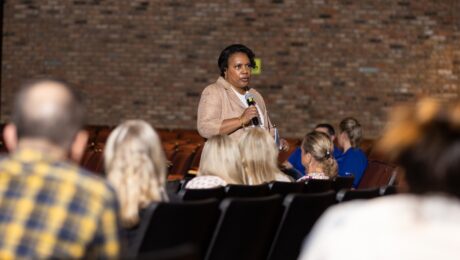
Justice Speakers Institute (JSI) is proud to welcome Chief Cynthia Herriott as its Vice President of Law Enforcement, joining JSI’s leadership team alongside the Institute’s co-founders, Judge Brian MacKenzie (Ret.) and David Wallace, (the Traffic Safety Guy) and Chief Mack Jenkins, Vice President of Community Supervision. “I am honored to be a part of JSI and to contribute to its mission


The opioid crisis has had a profound impact on the criminal justice system, with many individuals struggling with opioid use disorder (OUD) coming into frequent contact with police, courts, and jails. Despite the well-documented effectiveness of Medications for Opioid Use Disorder (MOUD), treatment gaps persist within the justice system. A recent study of high-overdose county


Treatment courts play a vital role in the justice system by providing rehabilitative alternatives for individuals struggling with substance use disorders. However, for these courts to be effective, they must operate within a well-structured, forward-thinking framework. This is where strategic planning becomes essential. A strategic plan ensures that treatment courts remain focused on their mission,

The Role of a Mentor in VTCs At its core, a Veteran Treatment Court (VTC) mentor serves as a trusted peer and supporter of veteran participants (mentors), guiding them through the court process and connecting them with the necessary resources. Their primary obligations include engaging with and encouraging mentees, assisting them in resolving personal or
-

Connecticut Chief Justice Raheem L. Mullins on Court Leadership
Chief Justice Raheem L. Mullins discusses menta... -

Substance Use Disorder Stigma: Language and Attitudes Matter
Language and attitudes can influence how justic... -

Nebraska Chief Justice Jeffrey J. Funke on the Future of Justice
Chief Justice Jeffrey J. Funke discusses judici...