


The factors that make up a successful Drug Treatment Court (DTC) are diverse, but the emerging research demonstrates, beyond a reasonable doubt, that the interaction between a judge and a participant is central to that success[1]. The bond between participant and judge is not solely dependent upon the judge’s personality but rather upon the nature


The national average for people with alcohol use disorders is 1:10. According to Law.com, for lawyers, it’s 1:3. Alcoholism in the legal profession is a significant issue. Fully one third of the profession is struggling with alcoholism. How can that be? What makes lawyers vulnerable to alcoholism? And what is the profession doing about it?

As almost every American has learned from watching a myriad of police shows, a person charged with a crime has the right to an attorney and if that person cannot afford an attorney, one will be provided for them. Contrary to the television shows, the language about the right to an attorney contained in the

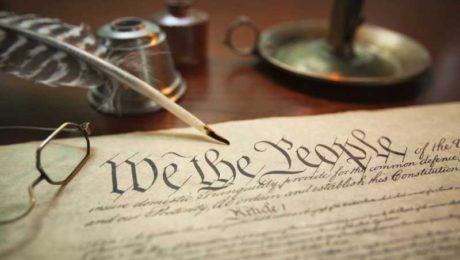
At the 2016 Democratic Convention, Khizr Khan asked of Republican Presidential Candidate Donald Trump; “Have you even read the United States Constitution?” Unless you are living under a rock, if you are in the United States you have heard about his question and the ongoing political debate, as have millions of people around the globe.

In part two of this series, Judge Brian MacKenzie interviews Judge Michael Haley about his law review article, Drug Courts: The Criminal Justice System Rolls the Rock. Judge Haley shares how Sobriety Courts transformed his approach to sentencing, offering hope and improving outcomes for participants and judges alike.


Courts have started to determine whether sexual orientation or gender identity discrimination is cognizable as sex discrimination under federal statutes. The Equal Employment Opportunity Commission (EEOC) issued guidance and an administrative ruling in 2015 that interpreted Title VII of the Civil Rights Act to include sexual orientation-based bias within the definition of sex-based discrimination. This

It was good news and bad news this week for those who wish to legalize marijuana when the Drug Enforcement Administration (DEA) declined to re-schedule marijuana from a Schedule I to Schedule II drug. (Statement 1, Statement 2) The ruling came in response to two petitions – one from the governors of Rhode Island and

This episode of Justice Speaks examines pivotal court decisions addressing voting rights following the Shelby County v. Holder ruling. Judges Peggy Hora (Ret.) and Brian MacKenzie (Ret.) discuss cases in North Carolina, Wisconsin, Texas, Michigan, and Kansas that highlight the ongoing battle to protect democracy and equality in the face of restrictive laws.

Sadly, the above news headlines are not uncommon. According to the United Nations, it is estimated that globally there are 5,000 murders called ‘honor killings’ every year. Women’s advocacy groups have estimated the number of victims is closer to 20,000 annually because many of these murders are covered up as accidents or suicides. With the

-

Treatment Court Data and National Infrastructure with Dr. DeVall
This Justice Speaks episode examines how treatm... -

AI Describes Many Technologies and None of Them Are Intelligent
What courts call “AI” is rarely intelligent—and... -

Hardwiring Justice: Governing AI Before It Governs the Justice System
Artificial intelligence is already embedded acr...