7 | 8 | 9 | 10 - Balancing Authority and Support: Ethical Challenges in Community Supervision within Treatment Courts
10:30 am-11:30 am December 10, 2025 1200 Conference Center Blvd Murfreesboro, TN  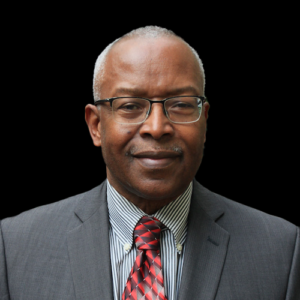 In this session, JSI Vice President Mack Jenkins (Ret.) will explore the ethical complexities faced by probation officers, and case managers, involved in community supervision within treatment court settings. With a focus on balancing accountability and support, the session will examine key ethical dilemmas related to confidentiality, coercion, and equity in decision-making. In this session, JSI Vice President Mack Jenkins (Ret.) will explore the ethical complexities faced by probation officers, and case managers, involved in community supervision within treatment court settings. With a focus on balancing accountability and support, the session will examine key ethical dilemmas related to confidentiality, coercion, and equity in decision-making.
Key Learning Objectives: 1. Navigate Dual Roles Ethically: Understand how to manage the inherent tension between surveillance and support in treatment court supervision. 2. Protect Confidentiality While Ensuring Accountability: Explore the ethical boundaries of information sharing among multidisciplinary team members. 3. Promote Equity and Procedural Fairness: Identify and address potentialbiases in decision-making to ensure all participants are treated fairly and consistently. - Leading with Understanding: The Judge’s Role in Trauma-Informed Treatment Courts
2:55 pm-3:55 pm December 10, 2025 1200 Conference Center Blvd Murfreesboro, TN  This session explores how Judges in treatment courts often work with participants who have experienced trauma, addiction, and mental health challenges. JSI Associate Judge Gayle Williams-Byers will explore how a trauma-informed approach can improve judicial interactions, foster trust, and enhance participant outcomes. This session explores how Judges in treatment courts often work with participants who have experienced trauma, addiction, and mental health challenges. JSI Associate Judge Gayle Williams-Byers will explore how a trauma-informed approach can improve judicial interactions, foster trust, and enhance participant outcomes.
During this session, attendees will: 1. Understand the principles of trauma-informed judicial leadership.
2. Learn how to integrate trauma-responsive practices into courtroom interactions.
3. Explore case studies of successful trauma-informed judicial engagement - Collaborative Case Management in Veterans’ Treatment Court
2:55 pm-3:55 pm December 10, 2025 1200 Conference Center Blvd Murfreesboro, TN All Veterans Treatment Courts (VTCs) are composed of multidisciplinary teams working towards a common goal with justice involved veterans with behavioral health issues. In most cases the teams have more than one discipline that may play some type of case management role requiring some form of a case plan. Generally, the disciplines are supervision, treatment providers, and the VJO. Supervision may have a supervision plan with specific goals, while treatment providers may have a treatment plan designed to address clinical issues., the JSO may play some type of oversight role. Without well- coordinated plans, and collaboration in the effort to monitor the plans, there is a risk the participant may be confused, face redundancy, and be overwhelmed. In this session, JSI Vice President Chief Mack Jenkins (Ret.) will teach practical steps for treatment court teams to collaboratively apply the Risk Need Responsivity (RNR) model. Attendees will learn how to create a comprehensive case plan that addresses both criminogenic and clinical areas, and how to work together in employing the principles of case management in support of the participant’s recovery. Session Objectives 1. Attendees will learn the definition of Collaborative Case Management
2. Attendees will learn how to create a case plan that addresses criminogenic and clinical needs.
3. Attendees will learn how a multidisciplinary team can collectively employ the components of case management.
4. Attendees will learn how to overcome barriers to collaboration.
| 11 - Bridging the Gap: Understanding Co-Occurring Mental Health and Substance Use Disorders
8:00 am-9:00 am December 11, 2025 1200 Conference Center Blvd Murfreesboro, TN 
In this interactive session JSI Associate Danette Montoya will explore the critical intersection of mental illness and substance use, examining how integrated clinical approaches and coordinated system-level responses can improve outcomes. Participants will gain insight into evidence-based strategies for treating co-occurring disorders, the importance of wraparound services, and how to support this high-risk population through a collaborative, trauma-informed lens. Participants will learn to: 1. Identify the clinical and systemic factors that influence co-occurring disorders.
2. Explain why integrated treatment approaches are essential for improving outcomes.
3. Apply best and promising practices for engaging and supporting this complex population - Understanding Trauma: Foundations for Effective Practice
10:30 am-11:30 am December 11, 2025 1200 Conference Center Blvd Murfreesboro, TN
During this presentation, JSI Associate Danette Montoya will provide a comprehensive overview of trauma-informed practices, including a deep dive into vicarious trauma and its impact. Participants will learn to identify different types of trauma (commonly referred to as “Big T” and “little t”), often stemming from early adverse childhood experiences. Real-life case examples will illustrate these concepts, and the session will conclude with an exploration of evidence-based treatments tailored to individual TARCP needs. Objectives: 1. Examine the various forms of trauma experienced by TARCPs and their connection to vicarious trauma;
2. Analyze real-life case examples to enhance practical understanding; and,
3. Identify and evaluate effective treatments for individuals affected by trauma.
- Ethical Landmines in Veterans Treatment Courts
10:30 am-11:30 am December 11, 2025 1200 Conference Center Blvd Murfreesboro, TN 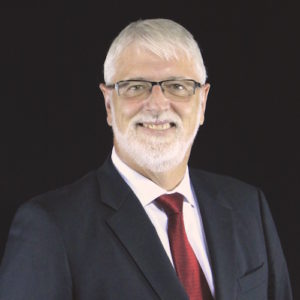 This session explores the ethical complexities in the operation of Veterans Treatment Courts (VTCs) and the roles of judges and lawyers that work within them. Judges, must navigate a collaborative decision-making team role. Prosecutors and defense advocates must pull back from their traditional adversarial role and learn to cooperate to enable a participant’s recovery. These and other changes in the professional roles of lawyers and judges are crucial to the problems solving court but gives rise to serious ethical questions. How can one be a good lawyer or judge in the treatment court context? JSI Co-President Judge Brian MacKenzie (Ret.) will examine these complicated issues. This session explores the ethical complexities in the operation of Veterans Treatment Courts (VTCs) and the roles of judges and lawyers that work within them. Judges, must navigate a collaborative decision-making team role. Prosecutors and defense advocates must pull back from their traditional adversarial role and learn to cooperate to enable a participant’s recovery. These and other changes in the professional roles of lawyers and judges are crucial to the problems solving court but gives rise to serious ethical questions. How can one be a good lawyer or judge in the treatment court context? JSI Co-President Judge Brian MacKenzie (Ret.) will examine these complicated issues.
Objectives:1. Recognize: How judges must comply with the cannons of ethics even in a VTC.
2. Identify: Ex-Parte communications among team members and what are best practices.
3. Avoid: Common VTC ethical mistakes.
| 12 | 13 |