



As you sit on the bench in a criminal court you see impaired drivers every day. You try to make a reasoned judgment in split seconds about the public safety risk presented by these drivers. You detain, set bail, or agree to leave them on their own recognizance based on your training and the information


Are you or a loved one over the age of 65 and still driving? Maintaining independence is important, but so is ensuring senior driver safety. Aging brings changes that can affect reaction time, vision, and decision-making on the road. However, age alone doesn’t determine driving ability. By understanding key safety concerns and utilizing available resources, senior


Most of the discussion after the recent death of Justice Scalia has been about the appointment of a new justice to the U.S. Supreme Court and the likelihood of Senate Republicans confirming that individual. However, what happens to the Supreme Court cases that have already been heard have not yet been released? And what about

This episode examines the constitutional concerns of mandating AA or NA in criminal justice settings. Learn about viable non-religious alternatives like SmartRecovery® and LifeRing Recovery to ensure compliance with the First Amendment while respecting defendants' rights and maintaining judicial and programmatic immunity.


The United States, and other parts of the world, faces circumstances where death has occurred as a result of conflict between law enforcement and a member of the community. Few would argue against the proposition that law enforcement serves as the nexus between the community and the criminal justice system. And yet attendees of the

In the 1980s and 1990s it was “crack babies.” Now it’s babies born “addicted to opiates.” We’ve spent 30 years trying to debunk the baby addict myth; that newborns can be born “addicted.” However, the misinformation continues with current headlines like “Life begins with agony of withdrawal for opiate-addicted babies.” Over ten years ago 30



This episode delves into the critical role of Drug Treatment Court judges and how their behavior impacts participant success. Research highlights the importance of procedural fairness, positive judicial demeanor, and the judge-participant relationship in creating transformational outcomes for drug-dependent defendants. Discover what makes a successful DTC judge.


It is demoralizing to feel unappreciated, so it is not surprising that many court leaders feel a bit despondent when people don’t care if courts have to do more with less. Some members of the public feel that “courts are no different than the rest of government,” and “we should have less government anyway.” Naturally,

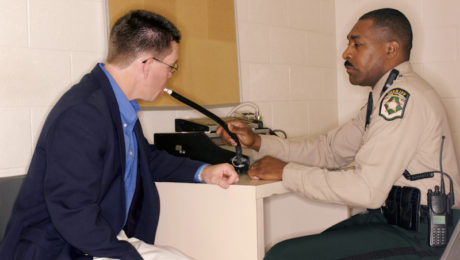
There is much speculation regarding the impact, if any, of the McNeely [1] decision on warrantless blood draws in DUI/DUID traffic investigations, stops, DUI test refusals, and arrests. The analysis is varied with some claiming that the holding mandates that law enforcement secure a warrant prior to any blood draws while others suggest that whether a
-

Treatment Court Data and National Infrastructure with Dr. DeVall
This Justice Speaks episode examines how treatm... -

AI Describes Many Technologies and None of Them Are Intelligent
What courts call “AI” is rarely intelligent—and... -

Hardwiring Justice: Governing AI Before It Governs the Justice System
Artificial intelligence is already embedded acr...