







Justice Speakers Institute

  • Start
  • Start
  • Start
  • Start
  • Start
  • Start
  • Curabitur iaculis
  • Home
  • Home
  • AI and Justice
  • Home
  • About Us
  • About Us
  • About Us
  • About Us
  • About Us
  • About Us
  • Meet JSI
    • The Partners and Associates of JSI
  • Parturient montes
  • Our Services
  • AI Consultation
  • What We Do
    • What JSI Can Do For You
    • Curriculum & Training Development
    • Corporate Road Safety
    • Selected Trainings & Publications
    • Service Inquiry
  • Features
  • Features
  • Features
  • Features
  • Features
  • Features
  • Vulputate magna
  • Why the JSI?
  • Request AI Training
  • Testimonials
  • Testimonials
  • Testimonials
  • Testimonials
  • Testimonials
  • Testimonials
  • What We Do
  • Cum sociis natoque
  • JSI Blog
  • Achievements
  • Achievements
  • Achievements
  • Achievements
  • Achievements
  • Achievements
  • Contact the Justice Speakers Institute
  • Nulla varius commodo
  • Contact JSI
  • Inquire About Speakers
  • Parturient montes
  • Ask the Expert
  • Vulputate magna
  • Cum sociis natoque
  • Meet JSI
    • Why the JSI?
    • The Partners and Associates of JSI
    • Our Topics of Expertise
    • Upcoming Events
    • Worldwide Expertise
    • Testimonials
    • Becoming JSI Associate
    • JSI Code of Ethics
  • Nulla varius commodo
  • JSI Blog
    • JSI Blog Menu
    • Justice and AI
      • AI in the Courts – An AI Series Hub
      • Hardwiring Justice – An AI Series Hub
  • JSI Podcast
  • JSI Justice Publications
    • JSI Justice Publications
    • Science Bench Book for Judges
      • Additional Resources
    • Drug Testing Programs
    • Corporate Road Safety
  • Resources
    • Justice and AI
    • JSI Justice Publications
      • JSI Justice Publications
      • Science Bench Book for Judges
        • Additional Resources
    • Veterans Courts
    • Drug Testing Programs
    • Corporate Road Safety
    • Procedural Justice
    • Drugged Driving
  • Contact Us
  • Start
  • Start
  • Start
  • Start
  • Start
  • Start
  • Curabitur iaculis
  • Home
  • Home
  • AI and Justice
  • Home
  • About Us
  • About Us
  • About Us
  • About Us
  • About Us
  • About Us
  • Meet JSI
    • The Partners and Associates of JSI
  • Parturient montes
  • Our Services
  • AI Consultation
  • What We Do
    • What JSI Can Do For You
    • Curriculum & Training Development
    • Corporate Road Safety
    • Selected Trainings & Publications
    • Service Inquiry
  • Features
  • Features
  • Features
  • Features
  • Features
  • Features
  • Vulputate magna
  • Why the JSI?
  • Request AI Training
  • Testimonials
  • Testimonials
  • Testimonials
  • Testimonials
  • Testimonials
  • Testimonials
  • What We Do
  • Cum sociis natoque
  • JSI Blog
  • Achievements
  • Achievements
  • Achievements
  • Achievements
  • Achievements
  • Achievements
  • Contact the Justice Speakers Institute
  • Nulla varius commodo
  • Contact JSI
  • Inquire About Speakers
  • Parturient montes
  • Ask the Expert
  • Vulputate magna
  • Cum sociis natoque
  • Meet JSI
    • Why the JSI?
    • The Partners and Associates of JSI
    • Our Topics of Expertise
    • Upcoming Events
    • Worldwide Expertise
    • Testimonials
    • Becoming JSI Associate
    • JSI Code of Ethics
  • Nulla varius commodo
  • JSI Blog
    • JSI Blog Menu
    • Justice and AI
      • AI in the Courts – An AI Series Hub
      • Hardwiring Justice – An AI Series Hub
  • JSI Podcast
  • JSI Justice Publications
    • JSI Justice Publications
    • Science Bench Book for Judges
      • Additional Resources
    • Drug Testing Programs
    • Corporate Road Safety
  • Resources
    • Justice and AI
    • JSI Justice Publications
      • JSI Justice Publications
      • Science Bench Book for Judges
        • Additional Resources
    • Veterans Courts
    • Drug Testing Programs
    • Corporate Road Safety
    • Procedural Justice
    • Drugged Driving
  • Contact Us
Contact
JSI
AI evidence due process

AI Evidence and Due Process: The Real Black Box Problem

Tuesday, 05 May 2026 by Hon. Brian MacKenzie (Ret.)
Artificial intelligence is increasingly used across criminal proceedings, yet many systems operate as opaque “black boxes.” This article argues that the real concern is not technical opacity but procedural justice. When defendants cannot challenge algorithmic evidence through meaningful disclosure, the adversarial process fails and due process is compromised.
  • Published in Artificial Intelligence, Law
Tagged under: AI Evidence, Algorithmic Transparency, Artificial Intelligence in Courts, Due Process, Procedural justice
AI in the courts guardrails

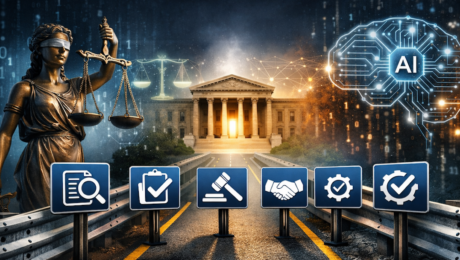
Five Guardrails Every Court Needs for AI

Sunday, 03 May 2026 by Hon. Brian MacKenzie (Ret.)
Artificial intelligence is already shaping court decisions. This article outlines five essential guardrails for AI in the courts, grounded in constitutional principles and judicial responsibility. It explains how transparency, validation, oversight, procurement, and continuous review ensure that technology strengthens justice rather than undermines fairness and public trust.
  • Published in Artificial Intelligence, Law
Tagged under: AI Evidence and Due Process, AI in the Courts, Court Technology Policy, Hardwiring Justice Series, Judicial AI Governance
AI evidence admissibility

When AI Becomes Evidence: Frye, Daubert, and Algorithmic Proof

Tuesday, 28 April 2026 by Hon. Brian MacKenzie (Ret.)
Artificial intelligence increasingly produces outputs used as evidence in court. From facial recognition to risk assessment algorithms, these systems raise new reliability questions. This article explains how existing evidentiary standards—Frye, Daubert, and Federal Rule of Evidence 702—already govern algorithmic proof and why rigorous judicial scrutiny is essential.
  • Published in Artificial Intelligence, Law
Tagged under: Algorithmic Accountability, Artificial Intelligence in Courts, Frye and Daubert, Judicial Gatekeeping
AI in Court Administration

Hardwiring Justice: AI in Court Administration and Judicial Decision-Making

Tuesday, 14 April 2026 by Hon. Brian MacKenzie (Ret.)
Artificial intelligence is quietly shaping how cases move through modern courts. From case management systems and scheduling algorithms to drafting tools and risk assessments, AI influences how information reaches the bench. This article examines how AI in court administration affects judicial decision-making and why understanding these systems is now part of judicial responsibility.
  • Published in Artificial Intelligence, Law
Tagged under: AI in Courts, Artificial intelligence and justice, Court Administration, Hardwiring Justice Series, Judicial Decision-Making
AI systems in the criminal justice system

AI Describes Many Technologies and None of Them Are Intelligent

Tuesday, 03 February 2026 by Hon. Brian MacKenzie (Ret.)
What courts call “AI” is rarely intelligent—and never neutral. This article explains the different AI systems used in the criminal justice system, how they work, and why understanding those differences matters before relying on their outputs.
  • Published in Artificial Intelligence, Law
Tagged under: AI in the Courts, Algorithmic Decision Systems, Criminal Justice Technology, Hardwiring Justice Series, Risk Assessment Tools
AI governance in the justice system

Hardwiring Justice: Governing AI Before It Governs the Justice System

Tuesday, 13 January 2026 by Hon. Brian MacKenzie (Ret.)
Artificial intelligence is already embedded across justice system operations, shaping outcomes long before judicial review. This article introduces the Hardwiring Justice series, arguing that AI governance in the justice system must come before entrenchment. Courts must assert transparency, accountability, and institutional oversight to ensure technology serves justice rather than silently redefining it.
  • Published in Artificial Intelligence, Law
Tagged under: AI Governance, Artificial Intelligence, Courts and Technology, Judicial leadership, Justice System Reform
AI Tort Liability

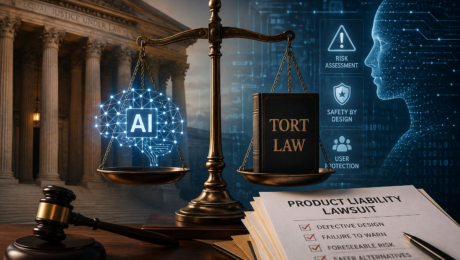
AI Tort Liability: Does Negligence Law Still Apply?

Tuesday, 16 December 2025 by Hon. Brian MacKenzie (Ret.)
As autonomous AI systems increasingly influence high-stakes decisions, questions arise about whether new liability frameworks are needed. This article explains why traditional negligence law already provides a workable structure for assigning responsibility among AI developers, deployers, and users, even when systems act with partial independence.
  • Published in Artificial Intelligence, Law
Tagged under: AI tort liability, Artificial intelligence risk, Autonomous systems, Legal Accountability, Negligence law
AI in Treatment Courts

AI in Treatment Courts: Keeping Treatment Human

Tuesday, 09 December 2025 by Hon. Brian MacKenzie (Ret.)
Artificial intelligence is entering treatment courts, influencing how participants seek support and how supervision is delivered. But AI cannot replace therapy, manage crises, or ensure participant safety. Treatment courts must adopt clear policies that establish AI as a supplemental tool while preserving the human-centered treatment that defines these courts.
  • Published in Artificial Intelligence, Law, Problem Solving Courts
Tagged under: AI in treatment courts, Behavioral health and technology, Evidence-based justice, Judicial ethics and technology, Treatment court policy
judicial ethics in problem-solving courts

A Judicial Landmine: Judicial Ethics Failures in Problem-Solving Courts

Tuesday, 02 December 2025 by Hon. Brian MacKenzie (Ret.)
Judicial ethics are the backbone of every problem-solving court. The Howard County case shows how quickly credibility collapses when a judge abuses authority, blurs boundaries, and humiliates participants. This failure didn’t just harm individuals—it destabilized the therapeutic purpose of treatment courts and revealed how essential ethics are to sustaining legitimacy.
  • Published in Judicial Ethics, Law
Tagged under: Judicial Ethics, Judicial Misconduct, Problem-Solving Courts, Procedural Fairness, Treatment Court leadership
AI and the Courts

Part Six: Judging the Machine – Lessons, Guardrails, and the Path Forward

Tuesday, 18 November 2025 by Hon. Brian MacKenzie (Ret.)
AI is reshaping the justice system, offering both promise and peril. Courts face the challenge of adopting these tools without compromising fairness or transparency. This article outlines the essential guardrails for judicial use of AI, ensuring technology strengthens—not supplants—the rule of law.
  • Published in Artificial Intelligence, Law
Tagged under: Access to Justice, AI in the Courts, Artificial intelligence and justice, Judicial Ethics, Technology and the law
  • 1
  • 2
  • 3
  • 4

Subscribe to JSI’s Blog Posts

Enter your email address to subscribe to this blog and receive notifications of new posts by email.

Recent Posts

  • evidence-based responses to substance use disorders

    Evidence-Based Responses to Substance Use Disorders

    Evidence should guide how the justice system re...
  • Accountability and substance use disorder recovery in the justice system

    Accountability: Recovery and Public Safety Can Coexist

    Accountability does not have to mean punishment...
  • Substance Use Disorders Are Treatable

    Substance Use Disorders Are Treatable: Recovery Is Possible

    Substance use disorders are treatable, and reco...

Upcoming Events

MENU

  • Start
  • Start
  • Start
  • Start
  • Start
  • Start
  • Curabitur iaculis
  • Home
  • Home
  • AI and Justice
  • Home
  • About Us
  • About Us
  • About Us
  • About Us
  • About Us
  • About Us
  • Meet JSI
    • The Partners and Associates of JSI
  • Parturient montes
  • Our Services
  • AI Consultation
  • What We Do
    • What JSI Can Do For You
    • Curriculum & Training Development
    • Corporate Road Safety
    • Selected Trainings & Publications
    • Service Inquiry
  • Features
  • Features
  • Features
  • Features
  • Features
  • Features
  • Vulputate magna
  • Why the JSI?
  • Request AI Training
  • Testimonials
  • Testimonials
  • Testimonials
  • Testimonials
  • Testimonials
  • Testimonials
  • What We Do
  • Cum sociis natoque
  • JSI Blog
  • Achievements
  • Achievements
  • Achievements
  • Achievements
  • Achievements
  • Achievements
  • Contact the Justice Speakers Institute
  • Nulla varius commodo
  • Contact JSI
  • Inquire About Speakers
  • Parturient montes
  • Ask the Expert
  • Vulputate magna
  • Cum sociis natoque
  • Meet JSI
    • Why the JSI?
    • The Partners and Associates of JSI
    • Our Topics of Expertise
    • Upcoming Events
    • Worldwide Expertise
    • Testimonials
    • Becoming JSI Associate
    • JSI Code of Ethics
  • Nulla varius commodo
  • JSI Blog
    • JSI Blog Menu
    • Justice and AI
      • AI in the Courts – An AI Series Hub
      • Hardwiring Justice – An AI Series Hub
  • JSI Podcast
  • JSI Justice Publications
    • JSI Justice Publications
    • Science Bench Book for Judges
      • Additional Resources
    • Drug Testing Programs
    • Corporate Road Safety
  • Resources
    • Justice and AI
    • JSI Justice Publications
      • JSI Justice Publications
      • Science Bench Book for Judges
        • Additional Resources
    • Veterans Courts
    • Drug Testing Programs
    • Corporate Road Safety
    • Procedural Justice
    • Drugged Driving
  • Contact Us

Copyright © 2022  Justice Speakers Institute, LLC.
All rights reserved.



The characteristics of honor, leadership and stewardship are integral to the success of JSI.

Therefore the Partners and all Associates subscribe to a Code of Professional Ethics.

JOIN US ON SOCIAL MEDIA

JUSTICE SPEAKERS INSTITUTE, LLC

P.O. BOX 20
NORTHVILLE, MICHIGAN USA 48167

CONTACT US

TOP

Get more information like this
in your inbox

Subscribe to our mailing list
and get interesting content and updates to your email inbox.

Thank you for subscribing.

Oops. Something went wrong.

We respect your privacy and take protecting it seriously

https://justicespeakersinstitute.com/wp-admin/admin-ajax.php