

Justice Speaks Podcast #95
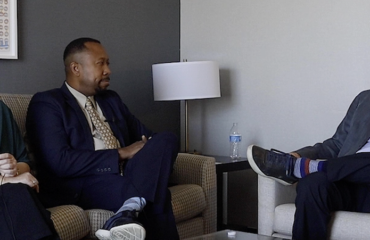
In this episode, Justice Speaks turns its focus to treatment courts, juvenile justice reform, and behavioral health initiatives within the American court system. The podcast features Chief Justice Loretta Rush of the Indiana Supreme Court, who reflects on her career as a juvenile court judge, her leadership in expanding problem-solving courts across Indiana, and her continuing work addressing substance use disorders, mental health, and child welfare issues through evidence-based judicial practices. This episode is sponsored by Reconnect.
From Juvenile Court Judge to Problem-Solving Court Advocate

Chief Justice Rush reflected on her early years as a civil litigator, where much of her work focused on pro bono representation for children and victims of domestic violence. That commitment to vulnerable populations ultimately shaped her transition to the bench, where she became a juvenile court judge and established one of Indiana’s earliest juvenile drug treatment courts. She described witnessing firsthand how untreated trauma, addiction, and mental health disorders repeatedly drew young people and families into the justice system. Rather than relying solely on punitive responses, she became an advocate for evidence-based interventions designed to stabilize families and improve long-term outcomes.
The Expansion of Problem-Solving Courts in Indiana
The conversation highlighted Indiana’s significant expansion of problem-solving courts during Chief Justice Rush’s tenure on the Supreme Court. Since becoming Chief Justice, the number of treatment and problem-solving courts in Indiana has quadrupled. These courts now address a wide range of issues, including substance use disorders, mental health challenges, veterans treatment, and family recovery needs. She emphasized that treatment courts are not simply alternatives to incarceration, but structured accountability systems that combine judicial oversight, treatment, supervision, and community support.
Chief Justice Rush discussed how the state moved away from a “tough on crime” philosophy toward a model grounded in research, rehabilitation, and behavioral health treatment. She explained that Indiana successfully closed two state juvenile correctional facilities while simultaneously reducing juvenile arrest rates, demonstrating that evidence-based practices can improve both public safety and outcomes for youth.
Family Recovery Courts and Early Childhood Intervention
Chief Justice Rush also discussed Indiana’s development of family recovery courts and safe baby courts. Indiana currently operates approximately 20 family recovery courts designed to support families affected by substance use disorders while reducing foster care placements and family separation. The safe baby court initiative focuses specifically on children ages zero to three involved in the child welfare system. These specialized courts coordinate with child welfare agencies, early childhood services, treatment providers, and programs such as Head Start to create comprehensive support systems for both parents and children during critical developmental years.
The discussion also examined the emotional and professional impact treatment courts can have on judges and court personnel. Chief Justice Rush noted that many judges who participate in treatment courts describe the experience as the most meaningful and rewarding work of their careers. The conversation also acknowledged the challenges associated with repeated exposure to trauma and emphasized the importance of supporting judicial wellness and resiliency.

The Future of Problem-Solving Courts and Artificial Intelligence
Looking toward the future, Chief Justice Rush identified several major challenges facing courts nationwide. Among the most significant is the continued need for sustainable funding for treatment programs and alternatives to incarceration. She also discussed the growing role of artificial intelligence within the justice system. While AI adoption among treatment court professionals remains relatively limited, Chief Justice Rush observed that algorithmic tools and risk assessment technologies are already influencing decision-making in many areas of the justice system. She stressed the importance of thoughtful oversight, transparency, and responsible implementation as courts continue navigating emerging technologies.
Chief Justice Rush also spoke about her leadership at the national level, including her work chairing behavioral health initiatives and national task forces addressing mental health and opioid-related challenges. Throughout the conversation, she emphasized a central principle that continues to guide her work: substance use disorder and mental illness must be treated as health conditions requiring evidence-based intervention, not moral failings deserving only punishment.
We at the Justice Speakers Institute thank Chief Justice Rush for sharing her insights and experiences on the podcast and thanks Reconnect for sponsoring this episode.
Get more articles like this
in your inbox
Subscribe to our mailing list and get the latest information and updates to your email inbox.
Thank you for subscribing.
Something went wrong.