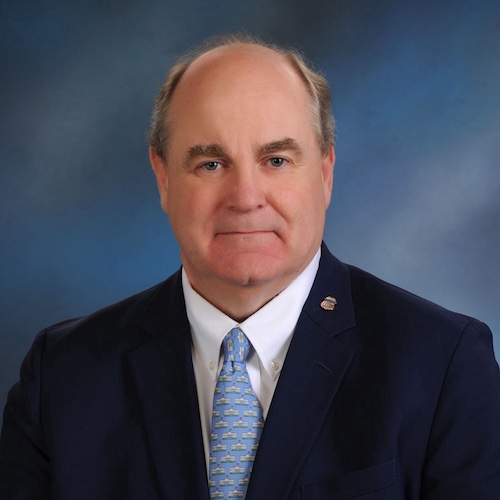
Honorable William S. Thompson
William S. Thompson is currently serving as Dean of Students at the Appalachian School of Law, where he also holds the position of Visiting Professor. Additionally, he serves as Counsel to the law firm Spilman Thomas & Battle, PLLC, based in their Charleston, West Virginia office. Before this, William S. Thompson was sworn in as the United States Attorney for the Southern District of West Virginia on October 13, 2021, and remained in this role until February 16, 2025. Thompson was nominated by President Joseph R. Biden, Jr. on August 10, 2021, and confirmed by the United States Senate on October 5, 2021. Before taking office as United States Attorney, Thompson was a Circuit Court Judge in West Virginia’s 25th Judicial Circuit. He was appointed to that position in 2007 by then-Governor Joe Manchin and re-elected in 2008 and 2016. During his tenure, Thompson presided over several treatment courts, including the state's first family treatment court. Before becoming a Circuit Court Judge, Thompson practiced law at the law firm of Cook and Cook in Boone County, where he focused on litigation. Thompson also previously served as President of Madison Healthcare, Inc., and as Vice President and General Counsel of Danville Lumber Company.
His work has been featured on the NBC Nightly News, HBO Vice, the New York Times, and the Washington Post. He was featured in a Pulitzer Prize-winning series of articles by Eric Eyre of the Charleston Gazette. He was an Advisory Member of the West Virginia Criminal Justice Reform Initiative Stakeholder Group for the Chan Zuckerberg Initiative. The White House recognized him in 2018 and 2020 for his work with drug courts, he received the 2019 West Virginia Public Defender Services Award for Outstanding Scholarship in Criminal Law, and he received an award from the Addiction Policy Forum in 2019, was named a West Virginia Bar Foundation Fellow in 2022 and received a Civil Rights Award from Governor Justice in 2023. He earned a degree in civil engineering from West Virginia University, where he received a Presidential Scholarship, and a law degree from West Virginia University College of Law, where he received the Marlyn E. Lugar Scholarship and was the Chairman of the Judicial Board.
Advocacy and Attorneys
- Courtroom Preparation, Presentation and Testimony
- Talking to a Jury
- Visual Aids, Props and Other Courtroom Necessities
- Expert Witnesses
- Cross Examination and Other Trial Advocacy Topics
- Strategic Litigation for Public Lawyers
- Scientific Evidence
- Toxicological Evidence
- Prosecutors and the Courtroom
- Ethics in Problem Solving Courts for Attorneys
- Right to Counsel
- Trial Advocacy
- Training for Trainers of Law Enforcement Officers and Prosecutors
- Police Prosecutor Interactions
- Criminal Defense for Misdemeanor and Felony Cases
- Forensic Evidence
- Effective Litigation Skills
- Jury Research and Selection
- Representing Clients in Therapeutic Court
- Burden of Proof in Criminal and Civil Proceedings
- Civil Procedure
Alcohol and Other Drugs
- Substance Use Disorder Issues
- Alcohol and Other Drug Risk Assessments
- Drug Classifications
- Drug Recognition Experts
- Marijuana and the Impact on the Law
- Marijuana in the Workplace
- Marijuana Toxicology
- Per Se Marijuana Laws
- Pharmacology
- The Use of Science & Technology to Monitor & Detect Alcohol and Other Drugs
- The Use of the Toxicologist in the Court
Civil Jurisprudence
- Negligence
- Direct Negligence
- Negligent Entrustment
- Vicarious Liability
- Civil Procedure
- Preparing the Civil Case
- Federal vs. State court
- Self-represented Litigants
Collaborative Law
- Appropriate Dispute Resolution
- Procedural Justice / Fairness
- Restorative Justice
- Therapeutic Jurisprudence
Constitutional Law
- First Amendment / Freedom of Association / Free Speech
- Second Amendment / Right to Bear Arms
- Fourth Amendment / Search and Seizure
- Fifth and Fourteenth Amendment / Due Process
- Sixth Amendment / Right to Confrontation / Right to Counsel
Corrections and Reentry
- Evidence based practices in corrections and reentry
- Structured Decision Making Tools
- Community based corrections
- Organizational alignment
Cultural Competency
- Procedural Fairness
- Trauma-Informed Court
Elder Exploitation and Abuse
- Prevalence, Projections and Predictions
- Overcoming Barriers
- Scams, Frauds and Trends
- Vulnerability and Aging
- Combating Elder Abuse
Ethics
- Ethics for Attorneys
- Judicial Ethics
- Judges and the Media
- Ethics in Problem Solving Courts
- Procedural Justice / Fairness
- Fair Administration of Justice
- Judicial Election Campaigns
- Judges and Social Media
- Prosecutor / Defense Ethics
- Attorneys and the Media
- Prosecutors and the Media
Family Law
- Substance Use and Families
- Family Drug Treatment Courts
- Use of Psychological Experts
Law Enforcement
- Ethics in Law Enforcement
- Evidence-based Approaches to Crime
- Law Enforcement and Prosecutor Relationships
- Law enforcement Practice and the Science of Dependency
- Law Enforcement and Community Memoranda of Understanding
- Community Oriented Policing
- Law Enforcement Management
- Training for Trainers of Law Enforcement Officers and Prosecutors
- The Signs and Symptoms of The Drugs Of Abuse
- Effective Courtroom Testimony Training for Police Officers
- Effective Report Writing for Police Officers
- Cultural Competence
- Team Building
- Law Enforcement Practice and the Science of Substance Use Disorders
- Law Enforcement and Community Memoranda Of Understanding
Leadership & Management
- Surviving Workplace Pressure
- Effective Communication Skills
- Conflict Resolution
- Personnel Performance and Assessment
- Partnerships and Team Building
- Finding and Keeping Perspective
- Mentoring and Coaching
- Managing the Media
Judicial Administration
- New Judge Orientation
- Ethics and Bias in the Courtroom
- The Role of the Judge in the Courtroom
- Court Leadership
- Court Business Operations
- Fines and Costs
- Bail and Bond Conditions
- Court Case Management Technology
- Courts and Social Media
- Judge as Coach
- Compassion Fatigue
- Secondary Tauma
- Judicial Decision Making
- Courts and the Community
- Aging Lawyers and Judges
- Caseflow Management
- Consent Decree Monitoring
- Courts and Media
- Discovery and Disclosure: The Benefits of Open File
- Impaired Lawyers and Judges
- Judicial Families
- Judicial Immunity
- Judicial Leadership
- Judicial Selection and Retention
- Jury Management
- Stress / Wellness
Post Sentencing Offender Supervision
- Effective Courtroom Testimony Training for Probation Officers
- Effective Report Writing for Probation Officers
- Ban-the-Box Initiatives (Reentry Strategies)
- Constitutional issues in post sentencing supervision
- Drug Testing chain of custody issues
- Dosage of Supervision
- Incentives and Sanctions
- Monitoring Tools
- Risk Assessments
- Sex Offender Supervision
- Testing
- Treatment
Problem Solving Courts
- Best Practices for Treatment Courts
- The Ten Key Components.
- Drug Testing in a Problem Solving Court Context
- Domestic Violence Courts
- Drug Treatment Courts
- Family Drug Courts
- Incentives and Sanctions
- Juvenile Courts
- Targeting Issues
- Team Building
Procedural Justice / Fairness and Therapeutic Jurisprudence
- Primer on Procedural Justice/Fairness
- Primer on Therapeutic Jurisprudence
- Primer on Restorative Justice
- Fair Administration of Justice
- Procedurally Fair Judges
- Procedurally Fair Policing
Public Affairs / Non-Lawyers in the Court
- Alcohol / Drugs in the Workplace
- Citizen Academies
- Criminal Case Processing for Non-lawyers
- Principles of Treatment / Alcohol and Other Drugs
- Smart on Crime
- Understanding the Court System
- Law Enforcement and Community Memoranda of Understanding
- Court Community Relations
- Educating the Community about Courts
Racial and Sexual Discrimination in the Workplace
- Constitutional Law Issues
- Cultural Competency
- Employment
- Diversity Training
- Ethics
- Jury issues
- Legal Issues
- Marriage
- Procedural Fairness
- Public Accommodations
- Religious Freedom
- Ethics and Bias in the Courtroom
Science and Technology
- Daubert and Frye evidentiary issues
- Judge as Evidentiary Gatekeeper
- Risks and Needs Assessments
- Using Technology to supervise offenders
- Cyber Security
- Effectively presenting scientific evidence post sentence
- Drug testing results chain of custody
- Toxicology
- Court Case Management Systems
- Monitoring Devices
Sentencing
- Best Practices for Sentencing
- Evidence Based Sentencing
- Risk / Needs Assessments
- Smart on Crime
- Targeting
Trauma in the Courtroom
- Trauma Informed Judges
- Creating a Trauma Informed Court
- Trauma and Procedural Fairness
- Victims and Trauma
- Trauma Informed Sentencing
- Secondary Trauma
Treatment
- Confidentiality
- Co-Occurring Disorders
- Dosage
- Medically Assisted Treatment
- Mindfulness
- Treatment Issues for Non-Treatment Professionals
Toxicology
- How defendants attempt to beat drug tests
- Illicit Drugs and brain chemistry
- The Signs and Symptoms of the Drugs of Abuse
- Effective Courtroom Testimony training
- Drug Overdoses
- Environmental Exposures
- The Opioid Epidemic
- Advisory Member of the West Virginia Criminal Justice Reform Initiative Stakeholder Group for the Chan Zuckerberg Initiative
- The White House recognition in 2018 for his work with drug courts,
- 2019 West Virginia Public Defender Services Award for Outstanding Scholarship in Criminal Law
- West Virginia Addiction Policy Forum award in 2019
- West Virginia Bar Foundation Fellow in 2022
- Civil Rights Award for West Virginia in 2023.
Click here to download his full resume.