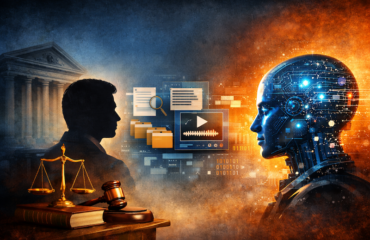



As artificial intelligence (AI) systems become more autonomous, more deeply integrated into everyday activities, and increasingly capable of initiating actions without direct human supervision, a question has emerged: Do we need entirely new liability such as AI tort liability to govern harms caused by agentic[1] decision makers? A review of negligence law suggests we may not. The principles that U.S. courts have applied for more than a century to evaluate dangerous conduct, foreseeability, risk creation, and the allocation of responsibility are fully capable of addressing AI-related harms.
Negligence law centers on this inquiry: whether the actor owed a duty of care, breached that duty, and caused a foreseeable harm by failing to act as a reasonable person under similar circumstances. This framework emerged from cases involving human behavior or tangible products, appears to apply equally to negligence claims arising from AI.
Why AI Tort Liability Does Not Require a New Legal Framework
Every actor in the AI lifecycle; developers, deployers[2], and end users, may act in ways that can increase risk. Developers design systems they know will interact with the world, sometimes in unpredictable ways. Deployers integrate those systems into sensitive environments such as healthcare, finance, justice, transportation, or public safety. Users rely on outputs that may appear authoritative, even when the result is not always reliable. Each of these roles can easily be analyzed under traditional negligence principles: What did the actor know? What should they have known? What risks were reasonably foreseeable? What precautions could a prudent actor have taken?
AI technology does not relieve these actors of legal responsibility. If anything, it heightens the duty to anticipate how the system may behave when operating with partial independence.
Because developers control the architecture, training, and safety mechanisms of AI systems, they are often the parties most capable of preventing harm before it arises. Negligence law already recognizes this logic: the person with specialized knowledge or control over a risk-producing instrument must take care to prevent foreseeable misuse or malfunction.
AI developers therefore have a responsibility to design systems with appropriate constraints, test for known failure modes, evaluate foreseeable misuse, implement guardrails against dangerous outputs, and issue clear warnings about limitations and proper use. A developer who releases an autonomous system without adequate testing or without disclosing known risks may breach the traditional duty of reasonable care. The fact that the harmful action was carried out by the AI itself does not break the causal chain; the negligence lies in releasing a system whose behavior was reasonably foreseeable, even if not perfectly predictable.

Foreseeability and Risk Creation in Autonomous AI Systems
Entities that deploy AI systems, such as private-sector companies in healthcare, finance, retail, and transportation, as well as public institutions like courts, policing agencies, social-service departments, and regulatory bodies, also assume traditional negligence duties toward those affected by the technology.
Deployers can be negligent in several ways, including choosing an AI system that is unfit for the task, failing to train staff on its limitations, allowing the system to operate without adequate human oversight, relying on its outputs in high-stakes decisions despite known accuracy problems, or using AI in environments where a reasonable organization would anticipate harm. Each of these failures reflects a departure from the level of caution expected when integrating complex, risk-bearing technology into real-world operations.
Negligence does not require expertise in software engineering; it requires acting as a reasonably prudent organization would under similar circumstances. When deployers rely blindly on AI, ignore its limitations, or treat it as infallible, traditional negligence doctrine already provides a mechanism for accountability.
End users can also be negligent when they rely on AI in ways that exceed their competence or the system’s capabilities. If a user employs AI for a task requiring professional judgment, despite warnings or known limitations, the user may be responsible for resulting harm. This mirrors standard negligence principles: individuals must use tools appropriately and with awareness of the risks they reasonably should know.
Critically, negligence law allows fault to be shared among multiple actors. If a developer fails to warn, a deployer fails to supervise, and a user relies unreasonably on the system, each can bear a portion of responsibility. Traditional comparative-fault rules appear to be capable of allocating responsibility among developers, deployers, and users.
Some have already argued that AI’s complexity and opacity make it difficult to establish causation[3], but negligence law routinely addresses harms involving intricate causal chains, including chemical exposures, pharmaceutical side effects, mechanical failures, and industrial processes. Tort law does not require perfect explanations; it requires evidence that the harm was more likely than not caused by the defendant’s breach of duty.
If a developer created an unreasonably dangerous system, if a deployer ignored warnings, or if a user acted irresponsibly, causation can be established even if the internal mechanics of the AI decision are not fully understood. The inquiry focuses on human failures, not decoding every internal computational step.

Applying Negligence Law to AI Tort Liability Without Reinvention
The impulse to create new liability laws for AI tort liability often reflects anxiety about emerging technology rather than actual gaps in legal doctrine. Tort law has long demonstrated flexibility in responding to new forms of risk; it has absorbed automobiles, pharmaceuticals, industrial machinery, toxic substances, and consumer products of every kind. Autonomous systems are not so fundamentally different that they fall outside the common law tort framework. Rather, they introduce new factual scenarios, not new categories of legal responsibility.
Negligence principles already supply a duty to act reasonably, a standard for assessing necessary precautions, a mechanism for allocating responsibility, and a framework for evaluating causation even in complex environments. Rather than attempt to reinvent AI-specific liability principles from scratch, courts may choose to apply established doctrines while clarifying how reasonable care should operate in the context of emerging technologies.
Agentic AI introduces novel factual situations but perhaps not novel legal categories. Negligence law is fundamentally about conduct, risk, foreseeability, and responsibility, concepts that apply as readily to the deployment of autonomous systems as to any other potentially dangerous human creation. The path forward need not be a legal revolution. Rather it may simply be the application of longstanding tort principles to new forms of risk.
[1] Agentic AI is a type of artificial intelligence that runs independently to design, execute, and optimize workflows – allowing enterprises to more effectively make decisions and get work done. AI agents can make decisions, plan, and adapt to achieve predefined goals – with little human intervention or completely autonomously.
[2] An AI deployer is defined as any individual or entity that uses an AI system within their professional scope, excluding personal and non-professional activities
[3] From Optional to Obligatory: Why AI’s Statistical Superiority Doesn’t Dictate Tort Law Duties
Get more articles like this
in your inbox
Subscribe to our mailing list and get the latest information and updates to your email inbox.
Thank you for subscribing.
Something went wrong.